


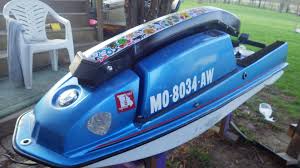
The 1988 Kawasaki JS550 Mikuni BN38 high/low settings represent the delicate balance between peak performance and engine failure for vintage watercraft enthusiasts. The JS550 is a legendary stand-up jet ski, known for its nimble handling and two-stroke power. However, at the heart of this machine lies the Mikuni BN38 diaphragm carburetor, a component that requires precise calibration to handle modern fuel and varying environmental conditions. Tuning these settings isn’t just about speed; it is about ensuring that the engine receives enough lubrication via the fuel-oil mix to survive high-RPM operation.
The Fundamentals of 1988 Kawasaki JS550 Mikuni BN38 High/Low Settings
To properly adjust your 1988 Kawasaki JS550 Mikuni BN38 high/low settings, you must understand the role of the two primary adjustment needles. Unlike modern electronic fuel injection, the BN38 uses physical screws to meter the amount of fuel entering the engine’s airstream.
-
The Low-Speed Screw (LS): This needle controls the fuel mixture from idle through the “off-the-line” acceleration phase (approximately 0% to 25% throttle).
-
The High-Speed Screw (HS): This needle manages the fuel flow during mid-range to Wide Open Throttle (WOT) operation.
If these screws are set incorrectly, you risk “bogging” (too much fuel) or “seizing” the engine (too little fuel).
Locating the Adjustment Needles
On the Mikuni BN38, the adjustment screws are typically found on the side of the carburetor body. The screw closest to the engine (the intake manifold) is the low-speed adjuster, while the one further away (closer to the air intake) is the high-speed adjuster.
Factory Baseline for 1988 Kawasaki JS550 Mikuni BN38 High/Low Settings
When starting a tune-up or troubleshooting a ski that won’t run, you should always return to the “Stock” or “Baseline” 1988 Kawasaki JS550 Mikuni BN38 high/low settings. This provides a safe starting point that should allow the engine to start and idle.
-
Low-Speed Screw: 1-1/4 turns out from the fully seated position.
-
High-Speed Screw: 1-1/8 turns out from the fully seated position.
Pro Tip: When “seating” the screws, turn them clockwise until they stop. Do not tighten them hard. The needles are made of soft brass and the seats can be easily damaged, which will permanently ruin the carburetor’s ability to hold a tune.
Fine-Tuning the Low-End 1988 Kawasaki JS550 Mikuni BN38 High/Low Settings
The low-speed circuit is responsible for that “snap” when you hit the throttle. If your 1988 Kawasaki JS550 Mikuni BN38 high/low settings are off on the low side, the ski will feel sluggish or difficult to board.
Correcting a Lean Low-End
If the ski idles fine but dies or “stumbles” the moment you give it gas, it is likely too lean.
-
Action: Turn the Low-Speed screw counter-clockwise (out) in 1/8 turn increments. This allows more fuel into the mix.
Correcting a Rich Low-End
If the engine produces excessive smoke, sounds “gurgly,” and takes several seconds to “clear its throat” before accelerating, it is too rich.
-
Action: Turn the Low-Speed screw clockwise (in) in 1/8 turn increments to lean it out.
Optimizing the High-Speed 1988 Kawasaki JS550 Mikuni BN38 High/Low Settings
The 1988 Kawasaki JS550 Mikuni BN38 high/low settings for the high-speed circuit are the most critical for engine safety. A lean condition at high RPMs creates immense heat, which can melt pistons in seconds.
The “Plug Chop” Method
To verify your high-speed settings, you must perform a spark plug read:
-
Ride the ski at full throttle for 20-30 seconds.
-
While still at full throttle, hit the stop button (kill the engine).
-
Coast to the shore and pull the spark plugs.
-
Tan/Light Brown: Your 1988 Kawasaki JS550 Mikuni BN38 high/low settings are perfect.
-
White/Grey: Dangerously lean. Open the high-speed screw (counter-clockwise) immediately.
-
Black/Oily: Too rich. You are losing power and fouling plugs. Close the high-speed screw (clockwise) slightly.
Variables That Affect 1988 Kawasaki JS550 Mikuni BN38 High/Low Settings
No single setting works for everyone. The 1988 Kawasaki JS550 Mikuni BN38 high/low settings are influenced by several external factors:
1. Humidity and Air Temperature
Oxygen-dense cold air requires more fuel. If you tuned your ski in the heat of July, you might find it runs lean and “pops” during a crisp October ride. You will need to open the needles slightly in colder weather.
2. Altitude Adjustments
As you go higher in elevation, the air becomes thinner. This naturally makes your engine run richer. Riders at high-altitude lakes usually have to turn their 1988 Kawasaki JS550 Mikuni BN38 high/low settings “in” (clockwise) to compensate for the lack of oxygen.
3. Aftermarket Exhausts and Filters
If you have upgraded to a “Westcoast” or “Coffman” pipe, or a high-flow flame arrestor, the stock will be far too lean. High-performance parts move more air, necessitating significantly larger jets and wider needle settings.
Troubleshooting Common Carburetor Failures
Sometimes, adjusting the 1988 Kawasaki JS550 Mikuni BN38 high/low settings won’t solve the problem. If the ski is inconsistent, check the following:
| Problem | Likely Cause | Fix |
| Won’t hold idle | Clogged Low-Speed passage | Remove and clean with carb cleaner |
| Bogging at WOT | Dirty internal fuel filter | Open carb and clean the mesh screen |
| Flooding/Fuel Leaks | Failed Needle and Seat | Replace the needle and seat assembly |
| Hard Starting | Stiff Diaphragms | Install a Mikuni Genuine Rebuild Kit |
The Role of Pop-Off Pressure
Pop-off pressure is the amount of pressure required to unseat the needle valve. If this pressure is too high, your won’t matter because the fuel won’t flow. If it’s too low, the carb will “dribble” fuel and flood the engine. For a stock 550, aim for roughly 18-22 PSI.
Maintaining Your 1988 Kawasaki JS550 Mikuni BN38 High/Low Settings
To ensure your remain stable throughout the season:
-
Use Fuel Stabilizer: Modern ethanol fuel breaks down quickly and gums up the tiny orifices in the BN38.
-
Check Fuel Lines: Air leaks in old, cracked fuel lines can mimic a lean carburetor setting.
-
Inspect the Pulse Line: The carburetor “pumps” fuel using a vacuum line from the crankcase. If this line is soft or leaking, fuel delivery will be erratic.
Conclusion: The Secret to a Long-Lasting JS550
The are the key to unlocking the soul of this vintage machine. By starting with the factory baseline of 1-1/4 turns (Low) and 1-1/8 turns (High), and making small, incremental changes based on spark plug color and engine feel, you can ensure your ski runs reliably for years to come. Tuning a 550 is as much an art as it is a science—listen to the engine, watch the smoke, and never be afraid to run it a little “fat” (rich) to protect those precious pistons.
5 Relevant FAQs
1. What happens if I set the high-speed screw to zero (fully closed)?
Closing the high-speed screw entirely will cause the engine to run extremely lean at full throttle. This will likely cause the engine to overheat and seize within minutes of high-speed operation. Always keep it at least 1 turn open.
2. Why does my 1988 JS550 bog when I first hit the gas?
This is usually a sign that your on the low-speed side are too lean. Try turning the low-speed screw out by 1/8 of a turn to see if the acceleration improves.
3. Does the oil-to-gas ratio change how I should set my carb?
Yes. If you run a “heavier” oil mix (like 40:1 instead of 50:1), the fuel becomes more viscous and “leaner” in terms of actual gasoline content. You may need to open your screws slightly more to compensate.
4. How do I know if my Mikuni BN38 needs a rebuild?
If the ski has sat for more than a year, or if adjusting the 1988 Kawasaki JS550 Mikuni BN38 high/low settings produces no change in how the engine runs, the internal diaphragms are likely hardened and need replacement.
5. Can I use a BN38 from a different ski on my JS550?
While many skis used the BN38, the internal “jetting” (the fixed orifices inside) is specific to the 550cc engine. If you use a carb from a different model, the 1988 Kawasaki JS550 Mikuni BN38 high/low settings will not work correctly until you swap the internal jets to match the 550 specs.

