

In an era where athletic performance and technology increasingly intertwine, Harmonicode sports emerges as a fresh paradigm. From weekend warriors to elite competitors, athletes are looking beyond sheer power and speed — they’re seeking harmony in movement, rhythm in action and precision in training. Harmonicode sports brings together these elements: movement analytics, rhythm sequencing and adaptive training frameworks. In this article, we’ll unpack what Harmonicode sports truly means, why it’s gaining traction, how it works in practice, and how you can start applying it today for better results.
What Are Harmonicode Sports?
Defining the Concept
At its core, Harmonicode sports refers to a training philosophy and performance model that emphasises rhythmic and harmonic motion combined with data-driven analytics and movement science. Rather than simply doing more exercise, the focus is on moving smarter — leveraging rhythm, flow and optimal mechanics.
The Key Components
-
Rhythm & Harmony of Movement – Athletes align actions (jumping, sprinting, direction changes) with rhythmic or harmonic patterns to reduce wasted motion and increase efficiency.
-
Data & Biomechanics – Wearables, motion sensors and AI track movement patterns, joint angles, rhythm deviations and fatigue markers. This produces actionable insights. disboard.co.uk+2Bible Aura+2
-
Adaptive Training – Based on collected data, tailored training protocols adjust in real time, focusing on improving rhythmic motion, reducing injury risk and boosting performance. Harmonicode
-
Application Across Domains – Whether in elite sport, esports, rehabilitation or fitness for all levels, Harmonicode sports applies. Magnochi+1
Why the Name Fits
“Harmonicode” fuses “harmony” (balance, rhythm, flow) with “code” (data, feedback, algorithmic refinement). It implies that movement can be coded, analysed and refined to achieve optimal performance, much like tuning an instrument.
Why Harmonicode Sports Matters
Enhanced Movement Efficiency
One of the strongest advantages of Harmonicode sports is improved efficiency. By analysing movement rhythms, ground-contact times, joint alignment and fatigue drift, athletes can eliminate wasted motion, conserve energy and perform more effectively. Bible Aura+1
Injury Prevention & Load Management
When you track rhythm deviations, asymmetries and movement breakdowns, you can identify injury risks before they manifest. Harmonicode frameworks emphasise this approach — monitoring motion degradation, joint stress and muscular imbalance. Bible Aura+1
Smarter, Personalised Training
Traditional training often uses generic protocols. In contrast, Harmonicode sports emphasises personalised programming based on each athlete’s movement “signature”. This adaptive method ensures that training addresses individual weak points and capitalises on strengths. Harmonicode+1
Inclusive & Innovative for All Levels
Contrary to what you might expect, Harmonicode sports isn’t just for elite athletes. Its principles apply to youth sport, recreational fitness and even rehabilitation. By gamifying movement and making real-time feedback accessible, it opens new doors for engagement. dutable.com+1
How Harmonicode Sports Works in Practice
Step 1: Movement & Rhythm Analysis
First, the athlete’s baseline is assessed. Sensors capture stride records, jump-landing sequences, movement cadence, symmetry and rhythm of motion. These data form the “harmonic code” of the athlete. disboard.co.uk
Step 2: Defining Key Metrics
From the baseline, key metrics are selected — e.g., ground-contact time in sprints, joint angle symmetry in cutting, motion cadence in change-of-direction drills. The rhythm of movement becomes a performance metric.
Step 3: Tailored Training Design
Training protocols are established with feedback loops. For instance:
-
Drills emphasising rhythmic cadence and movement flow rather than just speed.
-
Mobility and stability work aimed at reducing rhythm deviation.
-
Reactive drills aligned with rhythmic cues (e.g., rhythm-based sprint starts, timed reaction drills).
Step 4: Real-Time Feedback & Adaptation
During drills or workouts, sensors and software monitor performance. If rhythm or mechanics drift (due to fatigue or improper form), the system gives alerts or prompts corrections. Over time, training adapts. FordSpareIn+1
Step 5: Integration & Performance Application
As athletes move into competition, the harmonic code remains relevant: tracking fatigue-induced rhythm drift, managing loads to maintain movement harmony under pressure and ensuring performance remains efficient.
Real-World Applications of Harmonicode Sports
Elite and Team Sports
In professional sport programmes, coaches are using harmonic code analysis to refine shooting mechanics in basketball, cutting mechanics in football (soccer) and sprint cadence in athletics. These insights lead to measurable improvements: e.g., improved shot accuracy, reduced injury incidence. Bible Aura+1
Esports & Hybrid Training
Interestingly, Harmonicode sports extends into esports and motion-based gaming training. Reaction time, posture, balance and coordination are tracked as part of movement rhythms even in virtual spaces. Magnochi+1
Rehabilitation & Return to Play
Rehab specialists use harmonic code frameworks to detect compromised movement patterns, asymmetry or rhythm loss post-injury. Training focuses not just on strength but on restoring movement harmony before full sports re-entry.
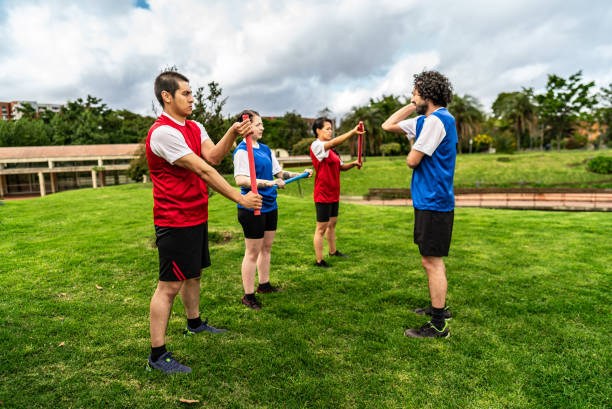
Fitness & Community Settings
For general fitness and movement education, Harmonicode sports offers gamified, rhythm-based workouts accessible to non-elite participants. Schools and community centres can use rhythm-movement apps and sensors to enhance engagement and motor-skill development. dutable.com
Benefits & Evidence of Harmonicode Sports
-
Improved movement efficiency: Research and case data show athletes realise improvements in performance via optimised movement patterns and rhythm alignment. Bible Aura
-
Injury risk reduction: By tracking motion breakdowns and asymmetries, proactively managing loads and mechanics, Harmonicode systems help decrease injury rates.
-
Optimal training adaptation: Customised training based on individual movement codes means fewer wasted sessions and more targeted progress.
-
Engagement & enjoyment: Especially in recreational, youth or community settings, the rhythmic, game-based nature of Harmonicode sports increases participation and motivation.
-
Scalable across levels: From elite pro athletes to weekend warriors, the principles remain valid and adaptable.
Challenges & Considerations
Access to Technology & Expertise
While sensors and software become more accessible, truly robust motion-analytics systems still require investment in hardware, software and expert interpretation. Smaller clubs or individuals may face constraints.
Avoiding Data Overload
With rich data comes the risk of over-analysis. Athletes and coaches must prioritise key metrics (rhythm, symmetry, load) rather than chasing every available number.
Integrating into Existing Training Culture
Transitioning from traditional volume-based training to rhythm-based, movement-efficiency centred frameworks can require educational shifts among coaches and athletes.
Ensuring Individualisation at Scale
In team settings or mass participation programmes, applying personalised harmonic code analysis and training can be challenging to scale. It’s crucial to maintain individual focus even in group contexts.
Future Directions for Harmonicode Sports
Advances in Wearables & Real-Time Feedback
Emerging sensor technology and embedded analytics will make harmonic code tracking more accurate, accessible and real-time. Expect deeper integration: AR/VR drills, instant movement feedback, and live adjustment coaching.
Wider Adoption in Grassroots & Education
As cost reduces and software becomes smoother, Harmonicode sports will likely be adopted broadly in schools, youth sport programmes, and general fitness platforms — shifting movement literacy earlier in life.
Cross-Disciplinary Fusion
Harmonicode frameworks will likely integrate with rehabilitation, physical education, dance/movement arts, esports and even health monitoring. Movement rhythm, biomechanics and cognition converge in new domains.
Competitive Formats & New Sport Models
With the technology and concept evolving, we may see new competitive formats or leagues built around harmonic movement optimisation, rhythm-based performance scoring and hybrid physical-digital competition models.
How to Get Started with Harmonicode Sports
-
Baseline Movement & Rhythm Audit – Use motion-capture tools, sensors or basic video analysis to assess your movement rhythm, cadence and symmetry.
-
Select Key Metrics – Choose 2-3 metrics tied to your sport: e.g., ground contact time in sprinting, symmetry in cutting, reaction-to-beat in sport/action.
-
Design Movement-Rhythm-Focused Drills – Incorporate rhythm cues (metronome, music beats), focus on movement-efficiency and enforce proper mechanics rather than pure volume.
-
Use Feedback Loops & Adjust – After each session, review data (or video), identify drift or inefficiency, adjust drills or load. Maintain a feedback loop.
-
Monitor Load & Fatigue Impact on Rhythm – Track how fatigue affects movement rhythm. As rhythm degrades, load may need reduction or focused recovery.
-
Apply in Training & Competition – Ensure rhythm and movement harmony don’t just apply in drills but carry into competition. Efficiency under fatigue is key.
FAQs About Harmonicode Sports
Q: Is Harmonicode sports only for elite athletes?
A: No. While elite athletes may gain the most dramatic performance benefits, the underlying principles of movement rhythm and mechanics apply to all levels — including recreational athletes, youth and fitness participants.
Q: Do I need expensive gear to begin?
A: You can start with affordable tools — smartphones, basic motion-analysis apps, wearable accelerometers. As you progress, more advanced systems become beneficial. The most important aspect is consistent measurement and feedback.
Q: Will this replace traditional training methods?
A: Not at all. Harmonicode sports complements traditional strength, conditioning, sport-specific skill work and mobility. It enhances these by adding the dimension of rhythm, motion-economy and feedback.
Q: How quickly will I see improvements?
A: Improvements vary by individual and sport. Some athletes report measurable gains in movement efficiency, rhythm stability and reduced fatigue in 6-12 weeks of focused work. Integration into training and consistency matter most.
Q: Are there risks?
A: The risks lie in over-reliance on tech, chasing metrics rather than outcomes, and ignoring foundational training principles. Also, in team or group settings, individual customisation is critical — one-size training may undermine results.
Conclusion
The term Harmonicode sports may sound futuristic — but its essence is firmly grounded in movement science, rhythm awareness and technological feedback. For athletes, coaches and fitness enthusiasts, adopting this mindset offers a compelling pathway: move smarter, stay in rhythm, train with precision and adapt with real-time insight. Whether you’re sprinting on the track, cutting on the basketball court or simply striving for better movement in your everyday training, Harmonicode sports provides a framework to optimise your body, your movement and your results. The future of sport is not just about going harder — it’s about going harmoniously. If you’re ready to tune your movement and elevate your performance, the discipline of Harmonicode sports awaits.

